Paired VNS Therapy for Stroke Rehabilitation
Paired vagus nerve stimulation therapy, including Vivistim, combines an implanted vagus nerve stimulator with intensive rehabilitation to support arm and hand recovery after selected ischemic strokes.
Spasticity and neurorestoration pathway
From tone and function assessment to recovery strategy
Function review
Assess injury type, tone pattern, remaining strength, sensation, disability, and rehabilitation history.
Goal definition
Define the goal, such as comfort, positioning, arm use, hand control, independence, or disease-modulation strategy.
Option matching
Compare baclofen pump, SDR, paired VNS, VNS for RA, nerve transfer, ReActiv8, or research pathways.
Procedure planning
Plan the implant, rhizotomy, stimulation therapy, or reconstruction only when candidacy, timing, and goals align.
Rehabilitation
Coordinate recovery, therapy, programming, outcome tracking, and long-term follow-up.
Function-focused
Planning starts with tone, comfort, remaining function, and realistic recovery goals.
Technology-aware
Established therapies, emerging devices, and research pathways are separated clearly.
Rehabilitation-linked
Surgical and device decisions are coordinated around therapy participation and follow-up.
Overview
Paired vagus nerve stimulation (VNS) therapy combines implanted nerve stimulation with focused rehabilitation exercises. The goal is not to replace therapy, but to make therapy more biologically powerful by pairing movement practice with brief stimulation of the vagus nerve.
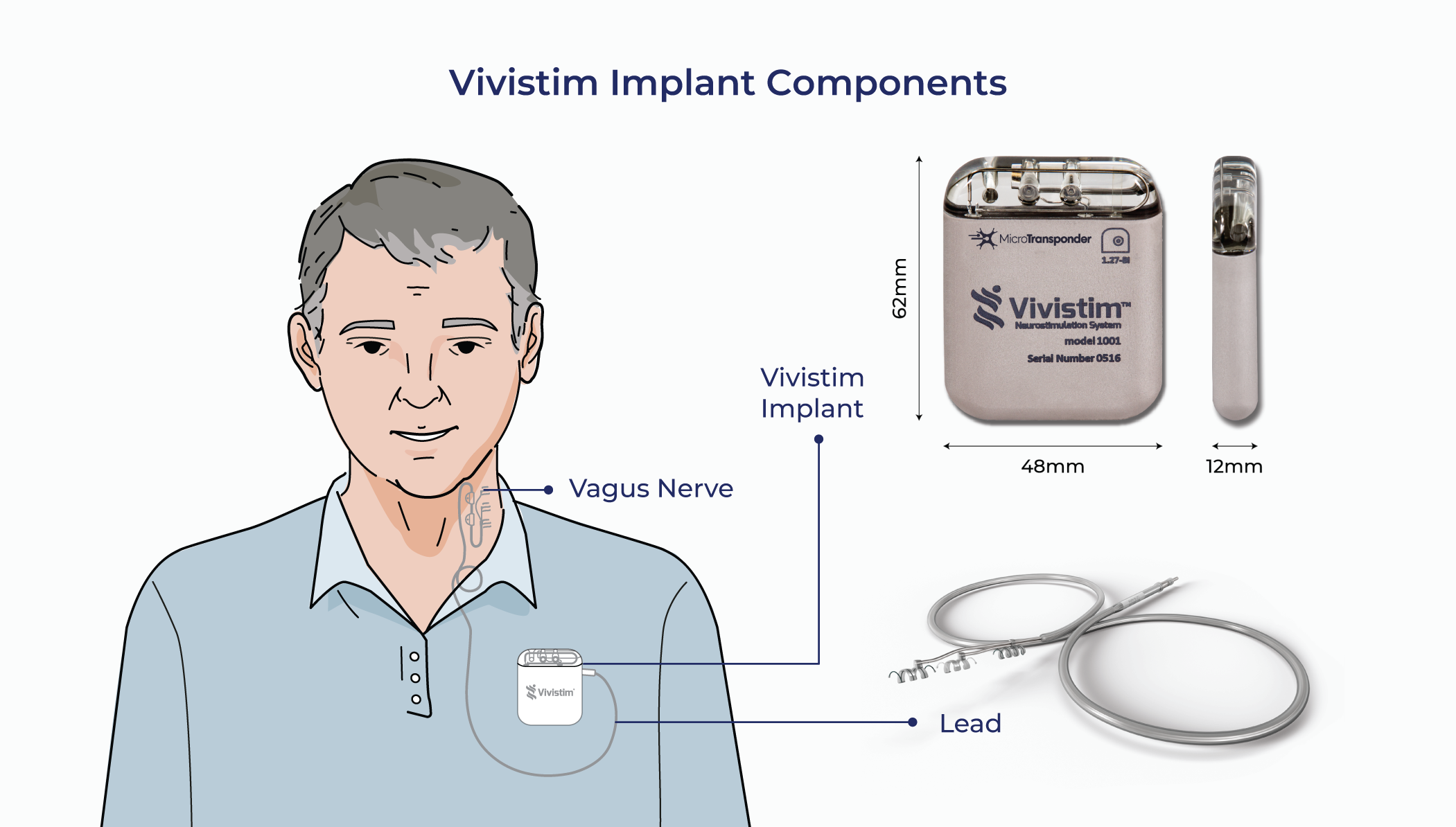
Vivistim is a paired VNS system used for selected chronic ischemic stroke survivors with persistent moderate to severe arm and hand impairment. The device is implanted, programmed, and then used alongside rehabilitation sessions and prescribed home practice.
Who it may help
Paired VNS therapy may be considered when a patient:
- Had an ischemic stroke and continues to have arm or hand weakness
- Has enough movement to participate in task-specific therapy
- Can commit to an intensive rehabilitation program and home practice
- Is medically suitable for an implanted neuromodulation device
- Has goals centered on upper-limb function, not only tone reduction or pain control
It is not a fit for every stroke survivor. The evaluation has to clarify the stroke type, time since stroke, current motor function, spasticity, sensation, cognition, medical risk, therapy access, and what gains would meaningfully change daily life.
How it works
The vagus nerve connects the brain and body and can influence networks involved in attention, arousal, and plasticity. During therapy, brief stimulation is delivered while the patient performs specific arm and hand tasks. Repeated pairing is intended to help the brain strengthen useful motor pathways while the patient practices meaningful movements.
The implanted system includes:
- A small implantable pulse generator placed under the skin of the upper chest
- A lead placed through a small neck incision and connected to the left vagus nerve
- Clinician programming tools used during therapy sessions
- A magnet that can be used for prescribed home activation after training
In the clinic, the therapist times stimulation with active movement practice. At home, selected patients may use the magnet during prescribed exercises and daily activities to continue reinforcing the same motor goals.
What to expect
Evaluation begins with the rehabilitation question: what movement is still present, what is limiting function, and whether the patient can participate in enough practice for paired stimulation to matter. Review usually includes stroke imaging, therapy notes, current medications, spasticity treatments, medical history, and a focused exam of arm and hand function.
If therapy and surgical candidacy are appropriate, implantation is typically a same-day outpatient procedure using a small chest incision for the generator and a small neck incision for the lead. Rehabilitation usually begins after the surgeon clears the incisions and device site. A typical program includes several weeks of in-clinic therapy, followed by ongoing home practice using the prescribed stimulation plan.
Follow-up matters. Device settings, comfort, battery status, MRI precautions, wound healing, therapy progress, and longer-term goals all need to be tracked.
Safety and practical considerations
Paired VNS is an implanted therapy, so the decision is different from simply adding another exercise program. Surgical risks include pain, bruising, swelling, infection, hoarseness, coughing, throat irritation, and other risks related to vagus nerve stimulation or implanted hardware. MRI can be possible in certain circumstances, but only under device-specific safety rules. Patients with a prior bilateral or left cervical vagotomy are not candidates for this system.
The key question is whether the potential functional gain justifies the implant and the rehabilitation commitment.
Dr. Barone’s approach
Dr. Barone evaluates paired VNS therapy through a neurorestoration lens. The focus is not simply whether a device can be implanted, but whether stimulation, therapy intensity, patient goals, and timing line up well enough to make treatment worthwhile.
As a functional neurosurgeon and neural-interface researcher, he coordinates the surgical side of care with rehabilitation planning, device programming considerations, and realistic expectations for recovery.
References
- Vivistim - How Vivistim Works
- Vivistim - The Process
- Vivistim - Clinical Data
- Dawson J, et al. Vagus nerve stimulation paired with rehabilitation for upper limb motor function after ischaemic stroke (VNS-REHAB). Lancet. 2021.
- Francisco GE, et al. Vagus nerve stimulation paired with upper-limb rehabilitation after stroke: two- and three-year follow-up. Archives of Physical Medicine and Rehabilitation. 2023.
Frequently asked questions
What is paired VNS therapy? +
Paired VNS therapy combines vagus nerve stimulation with task-specific rehabilitation exercises. The stimulation is timed with movement practice to support neuroplasticity and motor relearning.
What is Vivistim? +
Vivistim is an implanted paired VNS system used with rehabilitation for selected chronic ischemic stroke survivors with moderate to severe arm impairment.
Is this a stand-alone treatment? +
No. Paired VNS is used together with structured in-clinic and home rehabilitation. Patient selection, therapy participation, and realistic goals are central to whether it is appropriate.
What is implanted? +
The system includes a small implantable pulse generator, usually placed in the upper chest, and a lead that reaches the left vagus nerve in the neck.
Can patients use it at home? +
After programming and therapist-guided training, selected patients may use a magnet to activate stimulation during prescribed home exercises and daily practice.
Considering treatment for Stroke rehabilitation?
Dr. Barone evaluates new patients and referrals at Houston Methodist Hospital, Houston. Patients from outside Houston, across the United States, and internationally are welcome.